



Is your company ready to identify hidden potential and areas for improvement? A gap analysis with MasterQMS helps reveal the difference between current performance and desired goals.
By bringing overview, documentation, and follow-up together in one place, you can make better decisions, optimize processes, and strengthen your competitiveness in a constantly evolving market.
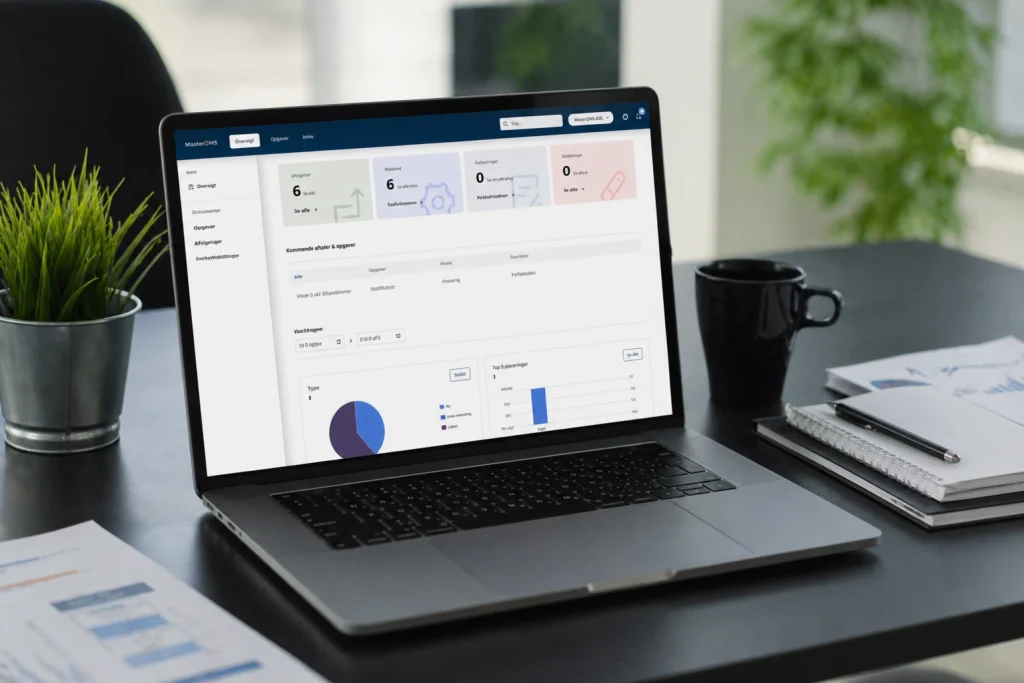
A gap analysis is a method used to identify the differences, or “gaps,” between a company’s current situation and its desired goals.
A gap analysis is therefore a tool that helps improve your competitiveness by making better use of resources and creating more efficient processes.
The method is often used as a foundation for meeting international requirements, which you can read more about at Danish Standards.
There are three key questions in a gap analysis:
A gap analysis defines how strategic or tactical objectives are embedded throughout the organization at administrative, operational, and technical levels. The analysis provides a clear overview of where the company stands today, where it wants to go, and which specific gaps need to be addressed in order to reach its goals.
In this way, the gap analysis provides the foundation for identifying priority areas and determining the actions that need to be taken. It helps translate goals and requirements into concrete initiatives, enabling the company to work systematically with improvements, compliance, efficiency, and development.
The result is a solid basis for decision-making, giving management and key stakeholders insight into strengths, shortcomings, and opportunities. This makes it easier to prioritize resources, plan the next steps, and ensure that the efforts create real value for the company.
Companies and organizations
In short, a gap analysis is used by anyone who wants to understand:

A gap analysis is important because it highlights the difference between a company’s current situation and its goals. It provides a clear basis for decision-making by identifying where improvements are needed.
At the same time, it helps focus efforts so resources are used effectively and the most important areas are prioritized. The result is a more structured approach to development and a stronger competitive position.
We always tailor the analysis to your industry, organization, and specific needs. If you require more than an analysis, we can also provide consulting for ISO certification.
We work in three simple steps:
We map your organization through dialogue with key employees and management, combined with a review of relevant documentation.
We compare your current situation with your desired future state and clearly identify where the gaps are.
We prepare a concrete action plan outlining how you can close the gaps through targeted initiatives, clear priorities, and defined next steps.
Our consultants offer gap analyses wherever your company may need them. The list below is intended as guidance and inspiration. Contact our consultants, and we will work with you to find the right solution.
To assess the gap between current processes and the requirements of the standard.
To identify gaps in environmental management, sustainability, and regulatory requirements.
To identify differences between current practices and requirements for workplace safety and well-being.
To identify gaps in systems, security, and compliance.
To optimize workflows and reduce inefficiencies.
To compare current service levels with desired levels of customer satisfaction.
To identify skills gaps in relation to the company’s goals.
To analyze the gap between current performance and strategic goals.
In short, the greater the level of openness, access to knowledge, and insight into processes, the more accurate and valuable the gap analysis will be.
A gap analysis is a method used to identify the difference between a company’s current situation and its desired goal. The analysis highlights gaps, areas for improvement, or requirements that have not yet been met.
A gap analysis can be used to assess how far a company is from meeting the requirements of an ISO standard, such as ISO 9001, ISO 14001, or ISO 45001. It provides a clear overview of what is already in place and what still needs to be addressed.
Companies and organizations may need a gap analysis when they want to improve processes, implement new requirements, prepare for certification, identify competency gaps, or gain a clear overview of the difference between current practices and desired goals.
At MasterQMS, the analysis is always tailored to your company’s industry, organization, and specific needs. The process typically consists of preparation, analysis, and solutions and recommendations, resulting in a concrete action plan with clear next steps.
It is beneficial for the company to provide access to relevant knowledge, key personnel, documentation, procedures, quality objectives, records, and information about day-to-day processes. The greater the level of openness and overview, the more accurate the analysis will be.
The time required depends on the size and complexity of the company and the purpose of the analysis. A smaller, clearly defined gap analysis can be completed more quickly than an analysis covering several departments, processes, or standard requirements.
The price of a gap analysis depends on the time required and the scope of the assignment. Contact MasterQMS to discuss your needs so we can find a solution that suits your company and objectives.
Yes, a gap analysis can be used in many areas, including business processes, IT and data security, customer service, HR, competencies, strategy, and business development. The purpose is always to identify the gap between the current situation and the desired outcome.
The company gains a clear overview of strengths, shortcomings, and areas for improvement. The analysis provides a basis for prioritizing focus areas and defining concrete actions, enabling the company to work more systematically with development, efficiency, and compliance.
In the MasterQMS management system, the gap analysis can be created in the document or form module. Identified gaps can be registered as non-conformities, improvements, or tasks, while the results can be assessed in the risk and opportunity module.
Contact us for a non-binding dialogue about your need for consultancy within ISO standards. We offer tailor-made solutions that suit your organization and schedule.